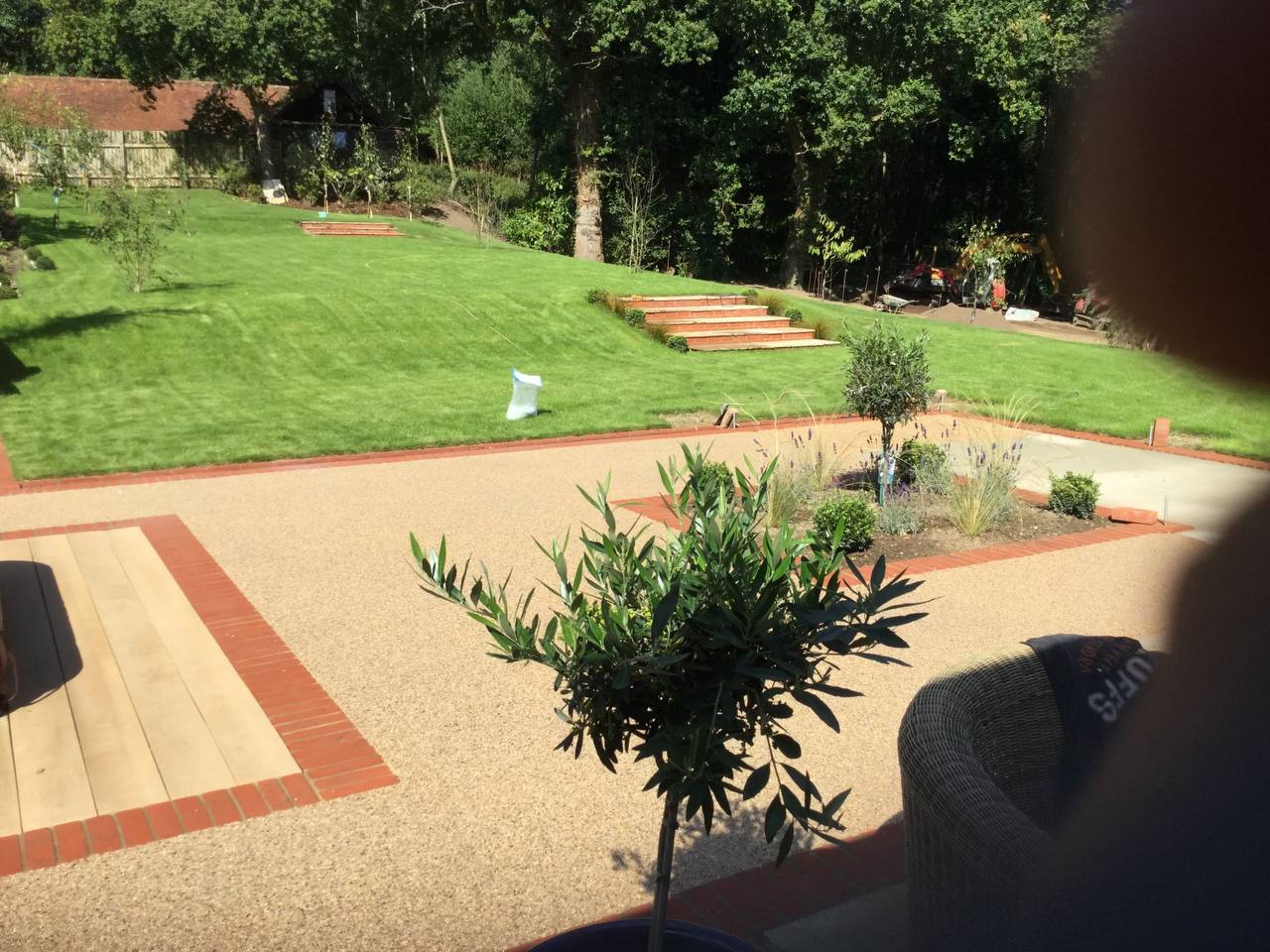
A resin driveway should provide a smooth, attractive and durable surface, so discovering small cracks can understandably be concerning. While an isolated surface mark does not necessarily mean the entire driveway is failing, cracking can indicate movement or weakness somewhere within the surfacing system. Understanding why cracks develop is important because simply treating what is visible may not resolve the underlying cause.
At Norwich Resin Driveways, we provide professional resin driveway services throughout Norwich, Norfolk. In this article, we examine some of the reasons small cracks can develop across resin surfaces, what they may tell you about the driveway beneath, and why early assessment can help prevent further deterioration.
Resin Driveways Depend on What Lies Beneath
The finished resin surface is only one part of a driveway. Its long-term performance depends heavily on the stability and condition of the underlying base.
A properly constructed driveway needs a foundation capable of supporting regular vehicle movements without excessive settlement or movement. If the layers beneath the resin begin to shift, stresses can be transferred to the finished surface.
Over time, these stresses may appear as small cracks.
An Unstable Sub-Base Can Cause Movement
Poor ground preparation is one of the most important factors to investigate when cracking appears.
If the sub-base was not constructed or compacted correctly, sections of the driveway may gradually settle differently from surrounding areas. This creates movement that the resin surface must absorb.
Possible warning signs can include:
- Fine cracks developing in particular areas
- Slight depressions or uneven sections
- Cracks that gradually become more noticeable
- Movement where vehicles regularly travel
Repairing the visible resin without understanding the condition beneath it may only provide a temporary improvement.
Cracks Can Transfer from an Existing Base
Resin surfacing is sometimes installed over a suitable existing surface. When this approach is used, the condition of that base is extremely important.
If the underlying surface already contains structural cracks or begins moving after the resin has been installed, those weaknesses can eventually affect the new surface above.
This is why professional assessment and preparation of the existing base are essential before resin is laid.
Regular Vehicle Loading Can Expose Weak Areas
Driveways must cope with repeated loading as vehicles enter, leave, turn and park.
Particular stress can occur in areas where:
- Vehicle wheels repeatedly follow the same route
- Cars regularly turn while stationary or moving slowly
- Vehicles remain parked in one position
- The underlying foundation has weaker sections
A properly constructed driveway should be designed with its intended use in mind. Where groundwork is insufficient, repeated loading can reveal weaknesses over time.
Drainage Problems Can Affect the Foundation
Water management is fundamental to driveway performance.
If rainwater is not dealt with effectively, it can affect the materials beneath or around the resin surface. Persistent moisture may contribute to instability, erosion or movement within poorly prepared areas.
Signs that cracking may be associated with drainage include:
- Water regularly collecting near cracks
- Sunken areas after rainfall
- Cracking close to drainage points
- Deterioration around driveway edges
Investigating how water moves across and around the driveway is therefore an important part of diagnosing cracking.
Temperature Changes Place Stress on Outdoor Surfaces
Outdoor surfaces naturally experience expansion and contraction as temperatures change.
A correctly designed and installed resin driveway should accommodate normal environmental conditions, but existing weaknesses can become more apparent as materials repeatedly respond to temperature variations.
Rather than temperature alone being responsible for every crack, it can expose problems that already exist within the driveway construction.
Weak Edges Can Lead to Localised Cracking
The perimeter of a driveway requires suitable support.
If edging is inadequate or surrounding ground begins to move, the resin near the perimeter may become vulnerable. Vehicle loading close to unsupported edges can place additional strain on these areas.
Cracking concentrated around the boundary of the driveway can therefore indicate that the problem involves edge restraint rather than the entire surface.
Poor Installation Can Shorten the Life of a Resin Driveway
Resin surfacing requires accurate preparation and application. Small errors during installation can affect how well the finished driveway performs.
Long-term problems can result from issues involving:
- Inadequate base preparation
- Incorrect surface preparation
- Poor compaction beneath the driveway
- Unsuitable existing surfaces
- Inconsistent resin application
- Insufficient attention to drainage or edging
This is why the workmanship beneath the finished appearance is every bit as important as the resin itself.
Does Every Small Crack Mean the Driveway Needs Replacing?
No. Small cracks do not automatically mean that complete replacement is necessary.
The correct solution depends on factors such as:
- How many cracks are present
- Where they are developing
- Whether they are increasing in size
- Whether the surrounding surface is moving
- The condition of the underlying base
A localised defect may be repairable, while widespread cracking accompanied by movement can indicate a more substantial underlying problem.
An inspection is the best way to distinguish between the two.
Why Early Investigation Is Worthwhile
Cracks create potential weak points within an otherwise continuous surface. If movement continues beneath them, they may gradually widen or spread into surrounding areas.
Early assessment can identify whether the problem is isolated or whether it is the first visible indication of a developing foundation issue.
This gives homeowners an opportunity to address the cause rather than waiting until larger sections of the driveway become affected.
The Importance of Correct Resin Driveway Installation
The best way to reduce the likelihood of premature cracking is to construct the driveway correctly from the beginning.
A professional resin driveway installation should consider:
Ground Conditions
The existing ground needs to be assessed so that an appropriate foundation can be created.
Sub-Base Preparation
The foundation must be stable, correctly prepared and sufficiently compacted.
Drainage
Rainwater needs to be managed appropriately to prevent unnecessary problems around the driveway.
Edging
Secure boundaries help support the finished surface and maintain its shape.
Resin Application
The final resin-bound layer needs to be mixed, laid and finished consistently.
Each stage contributes to the performance of the completed driveway.
Professional Resin Driveway Services in Norwich, Norfolk
When cracks appear, identifying their cause is more valuable than simply disguising them. A professional assessment considers the complete driveway construction, including the visible resin, underlying foundation, drainage and surrounding edges.
At Norwich Resin Driveways, we provide professional resin driveway services throughout Norwich, Norfolk. Whether you are concerned about an existing resin surface or planning a new installation, careful preparation and experienced workmanship are central to achieving a durable, attractive result.
Conclusion
Small cracks across a resin driveway can develop for several reasons, including movement within the sub-base, weaknesses in an existing base, inadequate edge support, drainage problems or poor original preparation. The pattern and location of the cracking can provide useful clues, but the visible defect does not always reveal the complete cause.
The most important step is to investigate cracking before it becomes more widespread. Understanding what is happening beneath the surface makes it possible to determine whether a local repair is suitable or whether more substantial corrective work is required.
If you have noticed cracks developing across your resin driveway in Norwich, Norfolk, contact Norwich Resin Driveways. Our team can assess the condition of the surface and underlying construction and recommend an appropriate solution focused on restoring reliable, long-term driveway performance.
Call us on: 01603 361594
Click here to find out more about Norwich Resin Driveways
Click here to complete our contact form and see how we can help with your driveways.